The Complete Beginner’s Guide to Home Loans in the Philippines: Everything You Need to Know


Buying a home is one of the biggest financial decisions a Filipino can make. But with so many terms, fees, requirements, and loan types, the home loan process can feel confusing — especially if it’s your first time.
This guide breaks everything down in simple, easy-to-understand steps, so you know exactly how a home loan works, how to apply, and how to avoid common mistakes.
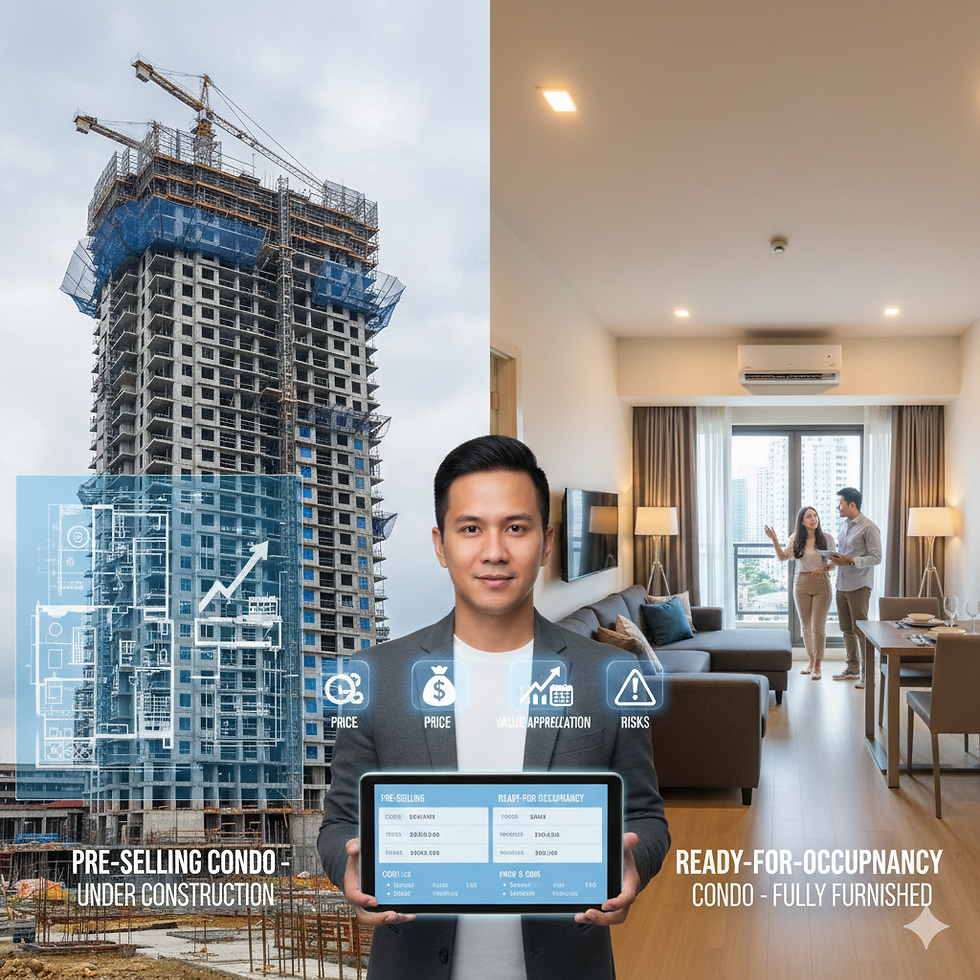
Whether you're buying a condo, townhouse, or house and lot, this is where your homeownership journey begins.
⭐ What Exactly Is a Home Loan?
A home loan (or housing loan) is money you borrow from a bank or Pag-IBIG to buy a property.
You pay it back monthly over 5–30 years with interest.
You can use a home loan for:
buying a condo
buying a house and lot
refinancing
home renovation
lot-only purchases
It spreads the cost over many years, making homeownership more achievable.
⭐ Who Can Apply for a Home Loan?
Most banks and Pag-IBIG accept:
employed Filipinos
OFWs
self-employed individuals
business owners
You must be:
at least 21 years old to apply
usually not older than 65–70 upon loan maturity
They also check:✔ stable income✔ clean credit history✔ proof you can pay monthly amortization
⭐ Types of Home Loans You Can Apply For
1. Bank Housing Loan
The most common option for fast approval and flexible terms.
Pros:✔ faster processing✔ flexible loan terms✔ higher loan approval✔ good for short-term payoff
Cons:✘ higher monthly payments✘ interest rate changes after your fixed period
2. Pag-IBIG Housing Loan
Best for long-term, budget-friendly monthly payments.
Pros:✔ lower monthly amortization✔ up to 30 years to pay✔ fixed and predictable rates
Cons:✘ slower approval✘ lower loan approval amount✘ strict documentation
3. In-House Financing (Offered by Developers)
This is when the developer itself finances your property.
Pros:✔ fewer documents✔ fast approval✔ good for those with irregular income
Cons:✘ much higher interest✘ shorter loan terms
Use this only as a temporary solution.
⭐ How Much Can You Borrow?
Banks and Pag-IBIG use your Debt-to-Income Ratio (DTI) to compute how much loan you qualify for.
Rule of thumb:Your monthly amortization should not exceed 30–40% of your monthly income.
Example: If you earn ₱40,000 monthly → your safe loan amount is based on a ₱12,000–₱16,000 monthly amortization.
Factors affecting your loan amount:
income
existing debts
property value
credit score
bank or Pag-IBIG guidelines
⭐ How Long Can You Pay a Home Loan?
Banks:✔ 5–20 years
Pag-IBIG:✔ up to 30 years
Longer terms = lower monthly payments Shorter terms = less interest overall
⭐ Interest Rates: Fixed vs. Variable
Fixed Rate
Your interest stays the same for a set number of years (e.g., 1, 3, 5 years).Great for budget planning.
Variable / Repricing Rate
After the fixed period, your bank recalculates your interest based on market conditions. Rates may go up or down.
Pag-IBIG offers more long-term fixed rates compared to banks.
⭐ Documents You Need to Prepare
For Employed Applicants
Government IDs
Certificate of Employment
Payslips (3–6 months)
ITR / tax documents
Bank statements
Proof of billing
For Self-Employed
DTI registration / business permits
Financial statements
Bank statements
Income tax documents
For OFWs
Employment contract
Remittance slips
Proof of employment abroad
Property Documents
Reservation agreement
Contract to Sell
Property details
Developer accreditation (for faster approval)
Complete documents = faster approval.
⭐ Step-by-Step Guide to Applying for a Home Loan
Step 1: Choose Your Property
Condo, townhouse, or house & lot.
Step 2: Pick Your Financing Type
Bank? Pag-IBIG? In-house?
Step 3: Get Pre-Qualified
Banks estimate how much you can borrow — this helps you choose the right unit.
Step 4: Submit Your Documents
Make sure everything is complete to avoid delays.
Step 5: Bank or Pag-IBIG Evaluation
They check your income, credit score, and property details.
Step 6: Loan Approval
You receive your Notice of Approval (NOA).
Step 7: Loan Release
Funds are released to the developer or seller once requirements are fulfilled.
Step 8: Start Monthly Payments
Amortization begins based on your signed loan terms.
⭐ Common Reasons Home Loans Get Denied
Banks rarely explain these, but here’s what usually causes issues:
✘ low income → not enough to cover amortization✘ too much debt (high DTI ratio)✘ inconsistent job history✘ negative credit records✘ incomplete documents✘ unstable or irregular income✘ property not approved by the lender
You can avoid these by preparing early and keeping your records clean.
⭐ Tips to Increase Your Chances of Getting Approved
✔ build a strong banking relationship✔ keep debt low✔ maintain good credit history✔ prepare complete documents✔ choose an accredited developer✔ keep your bank account “healthy”✔ use a qualified co-borrower✔ avoid multiple applications at once
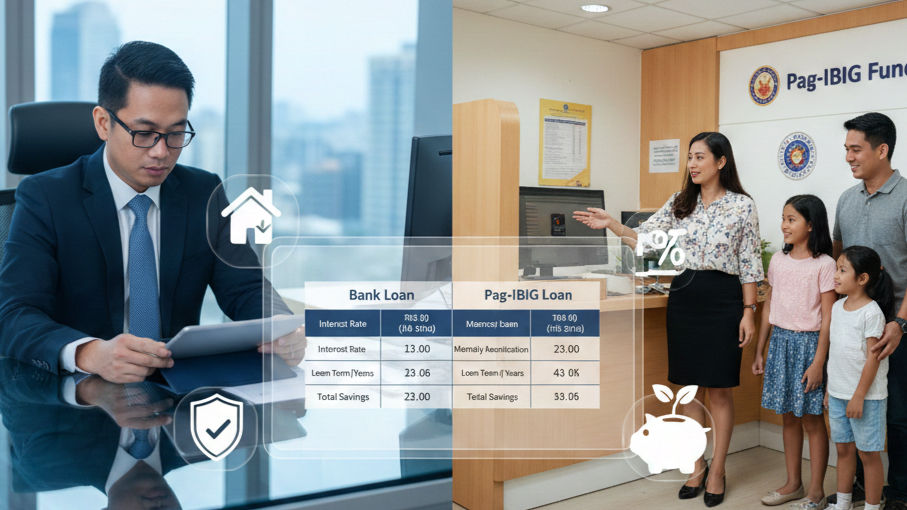
⭐ Should You Choose a Bank or Pag-IBIG?
Choose a Bank If You Want:
✔ fast approval✔ higher loan amount✔ shorter payoff✔ flexible terms
Choose Pag-IBIG If You Want:
✔ lower monthly payments✔ long-term repayment✔ predictable interest✔ budget-friendly amortization
Neither is “better” — the smarter choice depends on your income, lifestyle, and goals.
⭐ Save-Worthy Summary
Home Loan Basics Every Beginner Must Know:
A home loan lets you buy property now, pay over time.
Banks are faster; Pag-IBIG is more affordable long-term.
Your loan amount depends on your income and debts.
Approval requires clean documents and good credit.
Longer terms = lower monthly payments.
Shorter terms = less interest paid overall.
Choose based on your budget and future plans.
Understanding this early puts you ahead of 90% of first-time buyers.

Comments